
Most people do not fail at budgeting because they lack a spreadsheet. They fail because the plan on paper does not match how money actually moves through the month—irregular paychecks, surprise expenses, optimistic estimates, and categories that look neat until real life arrives. A budget that works is less about perfection and more about a feedback loop: track, adjust, and keep the plan honest.
This guide covers why budgets fall apart, how the popular 50/30/20 framework can serve as a starting point, why tracking for 30 days changes everything, which free tools can help, how to build loan payments into your plan, and how to revise when life shifts. Little Lake Lending offers this advice because short-term credit is easier to handle responsibly when the rest of your cash flow is visible—not because a budget alone solves every financial stress.
You do not need fancy software to begin. You need a clear picture of income, a realistic list of must-pay expenses, and a willingness to update the plan when the first version is wrong.
Why Budgets Fail
Budgets usually fail for predictable reasons:
They are based on guesses, not evidence. If you estimate groceries at a number you wish were true, the plan breaks in week two. Wishful categories create a false sense of control.
They ignore timing. A monthly total can look fine while your account hits zero on the 20th because rent, a car payment, and an insurance draft all land before payday. Cash-flow timing matters as much as monthly totals.
They have no buffer. A budget with every dollar assigned and zero margin for a co-pay, a parking ticket, or a higher utility bill will feel like failure the first time something ordinary goes wrong.
They are too rigid or too vague. Twenty micro-categories can be exhausting; one giant “misc” category hides overspending. Aim for enough detail to guide decisions without turning every purchase into a guilt event.
They are not revisited. A budget written in January may be useless in June after a job change, a new commute, or a medical bill. Budgets are living documents.
Reframing helps: a broken budget is data. It tells you where estimates were off. The goal is not to shame yourself—it is to update the numbers until they describe your real life.
The 50/30/20 Guideline as a Starting Point
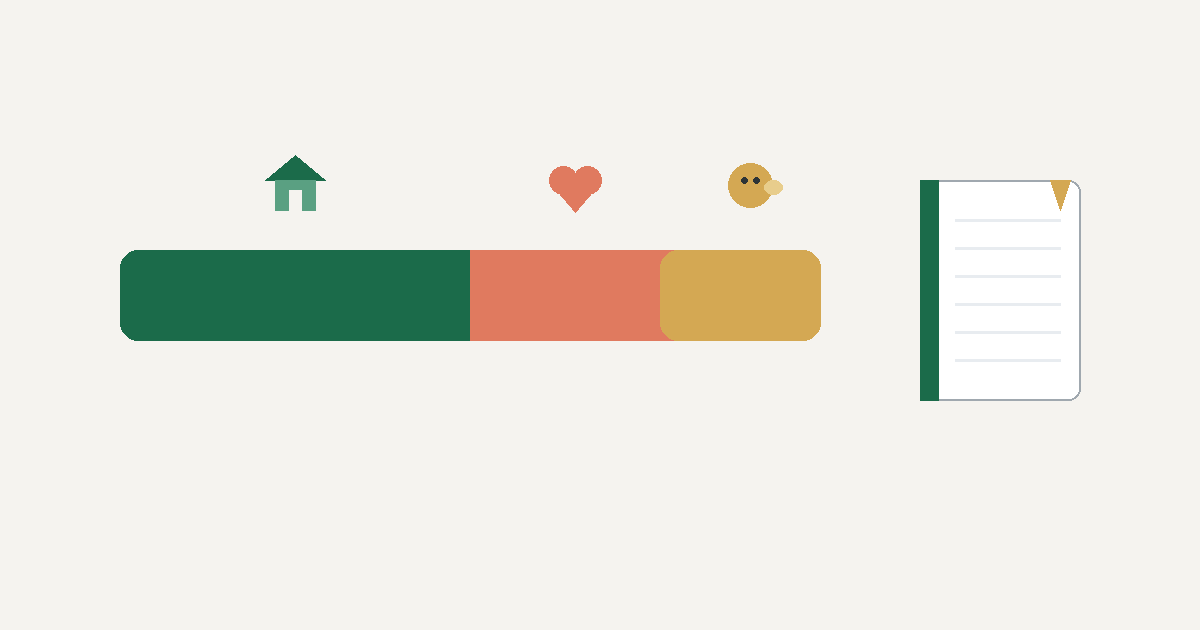
The 50/30/20 idea is a simple split of after-tax income that many educators use as a teaching framework:
- About 50% needs: housing, utilities, groceries, transportation, insurance minimums, minimum debt payments, and similar essentials
- About 30% wants: dining out, entertainment, hobbies, subscriptions you could cut without losing shelter or employment
- About 20% savings and extra debt payoff: emergency fund contributions, retirement contributions beyond any automatic need, and payments above the minimums
Treat these percentages as a compass, not a law. In high-cost housing areas, needs may exceed 50% for a while. Variable income workers may need to budget from a lower “baseline” paycheck and park extra earnings in a holding category. If your needs already consume most of your income, the honest move is to face that math—not to pretend the 30% wants category still fits.
How to use 50/30/20 productively:
- Calculate your typical monthly take-home pay (average several months if income varies).
- List essential bills and estimate essential variable costs from real spending.
- See what remains for wants and for savings or extra payoff.
- If needs are crushing savings, look for structural changes (housing costs, transportation, benefits, income) rather than only cutting small wants.
The framework’s value is the conversation it starts: Are essentials sustainable? Are wants crowding out savings? Are debt payments only the minimums forever?
Track for 30 Days Before You Trust the Plan
If you have never tracked spending, spend one month observing before you finalize targets. Use whatever method you will actually stick with: a notes app, a simple spreadsheet, or an app that categorizes transactions. Record or review income deposits, rent or mortgage, utilities, insurance, groceries, transportation, subscriptions, dining, childcare or medical costs, debt payments, and cash withdrawals.
At the end of 30 days, compare totals to your first guesses. Most people discover at least one surprise—often subscriptions, delivery apps, or “small” store runs that add up. That surprise is the foundation of a budget that works, because it replaces fiction with evidence.
During the tracking month, do not aim for perfection. Aim for completeness. You can cut later. First, see clearly.
Free Tools and Simple Systems
You do not need a paid product to budget well. Options include:
- A basic spreadsheet with income at the top, fixed bills listed, variable categories with weekly caps, and a running “left in checking” estimate
- Pen-and-paper envelope or notebook systems if digital tools tempt you to ignore them
- Bank and credit-union apps that already categorize transactions—export or review weekly
- Free budgeting apps that connect to accounts (review privacy permissions first)
- Calendar reminders two days before each bill due date
Pick one primary system. Switching apps every month resets your learning curve. A weekly 20-minute review—same day each week—beats a marathon session after an overdraft.
Whatever tool you choose, separate “budget category” from “account balance.” Your checking balance is not the same thing as money available for wants if rent is still unpaid. Some people use a separate savings account for earmarked rent; others use spreadsheet designations. Use the method that stops you from spending money that is already spoken for.
Build Loan Repayments Into the Budget on Purpose
If you have a loan—or you are considering one—treat the payment as a non-negotiable line in the needs section, not as something you will “figure out later.” Short-term installment credit in particular only works when the payment fits beside rent, food, utilities, and transportation.
Practical steps:
- Put each loan’s payment amount and due date on your calendar and in your budget list
- Align due dates with paydays when the lender allows it, so money is there when autopay runs
- Include a small buffer for possible bank returned-payment fees if your balance runs tight
- When you compare a potential new loan, draft the payment into your budget before you sign and see what it displaces
Little Lake Lending encourages borrowers to understand costs and schedules before taking credit, and a written budget is one of the simplest ways to test fit. If the only way a payment “works” is by skipping groceries or hoping nothing goes wrong, the loan is too large for your current cash flow—even if you might be approved.
Also plan for the end date. Installment loans have a finish line if you pay as agreed. When the loan ends, decide in advance whether that payment amount becomes savings, extra payoff on another debt, or breathing room—so the money does not silently disappear into lifestyle creep.
Adjust When Life Changes
A working budget is revised on purpose. Trigger a review when income rises or falls, housing or childcare costs change, a medical issue or car repair spikes expenses, you add or remove a debt payment, or you notice three months of the same overspending category.
When you adjust, change the written plan—not only your mood. If groceries consistently run over, raise the grocery number and cut a want category, or change shopping habits. If you received a raise, decide deliberately how much goes to savings versus wants. If income dropped, cut wants first, then revisit needs, then seek income or assistance resources before relying on high-cost credit as a standing bridge.
For irregular expenses (tires, back-to-school, annual insurance), divide the yearly cost by 12 and save monthly into a sinking fund. That single habit prevents many “emergencies” that are actually predictable.
A Simple Monthly Setup You Can Repeat
- List take-home income for the month (or a conservative average).
- Enter all fixed bills and due dates.
- Enter minimum debt payments and any planned extra payoff.
- Set realistic caps for groceries, fuel, and other variables based on your 30-day track.
- Assign a small miscellaneous buffer.
- Whatever remains can split between wants and savings—using 50/30/20 as a check, not a prison.
- Schedule a weekly review and a month-end reset.
If you leave the month with better information than you started with, the budget is working—even if the first version looked messy.
Conclusion
Budgets fail when they are fictional, inflexible, or abandoned after the first rough week. They work when they are grounded in 30 days of real tracking, when frameworks like 50/30/20 are used as guides, when tools stay simple enough to open weekly, and when loan payments are built in before you borrow—not after. Life will change; your plan should change with it.
If you are weighing a short-term installment option alongside your monthly plan, take time to map the payment against your essentials first. Little Lake Lending’s site can help you learn how installment schedules work so you can decide with clearer numbers in hand.